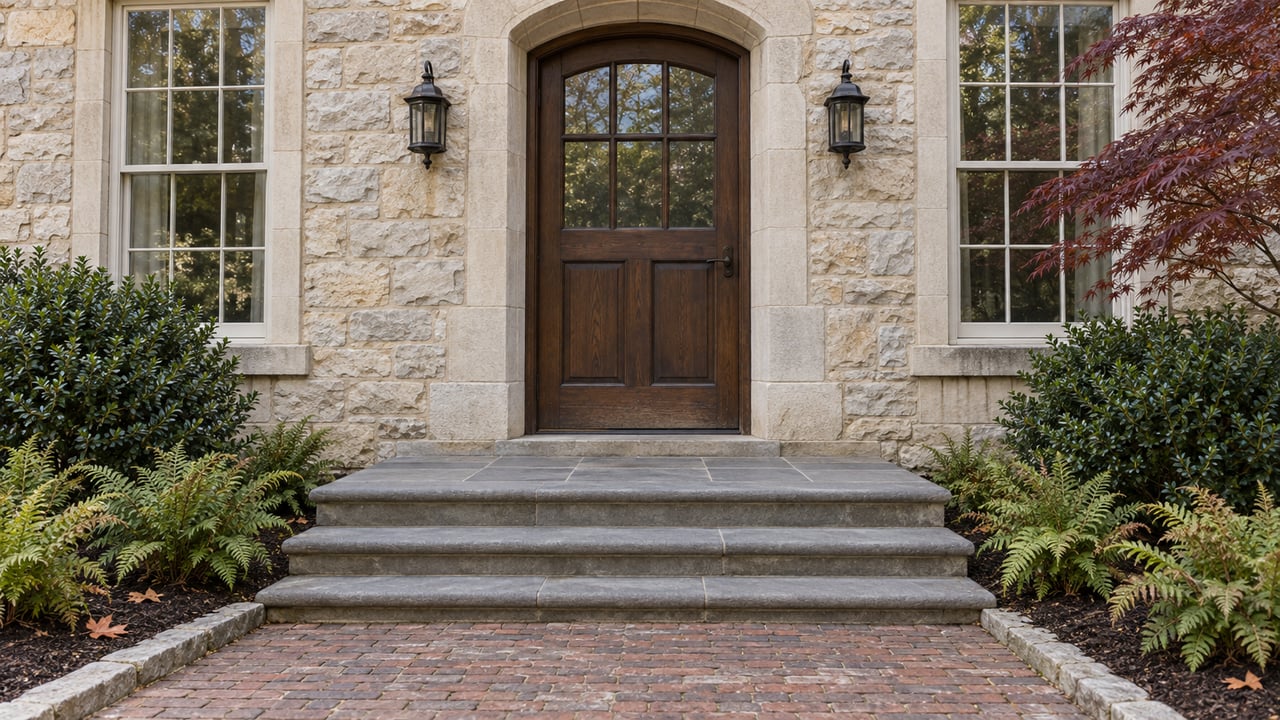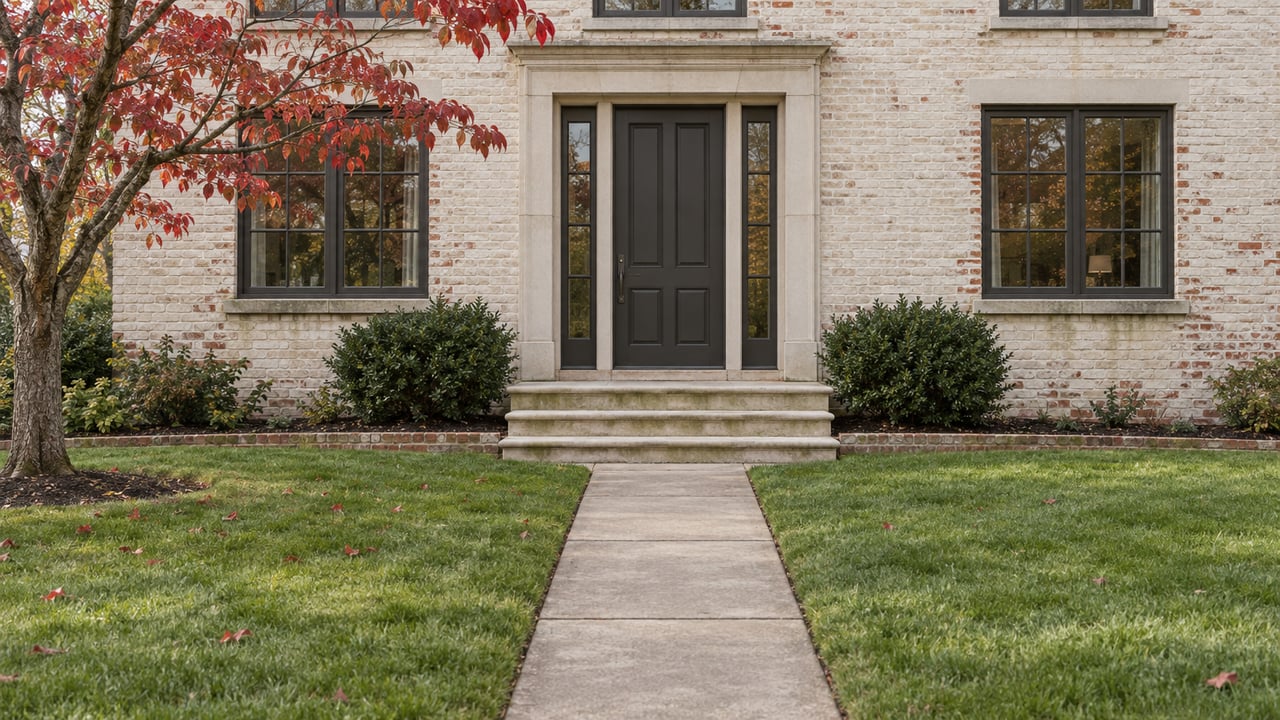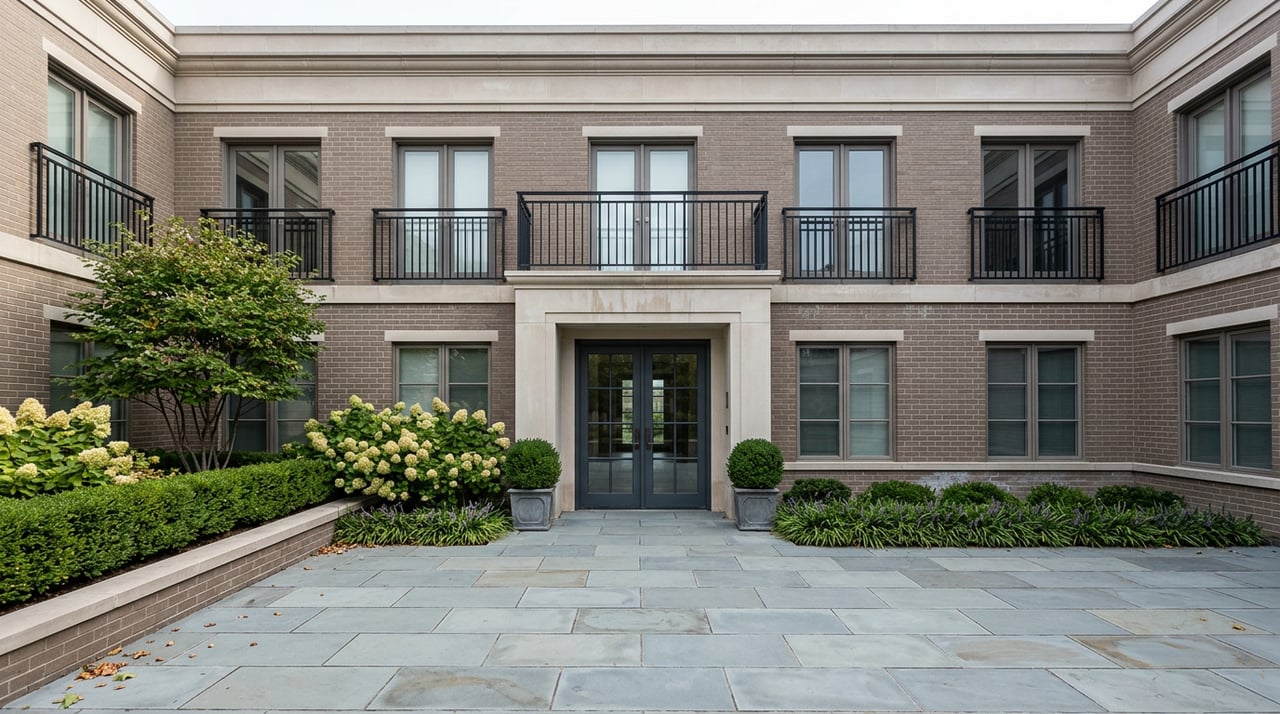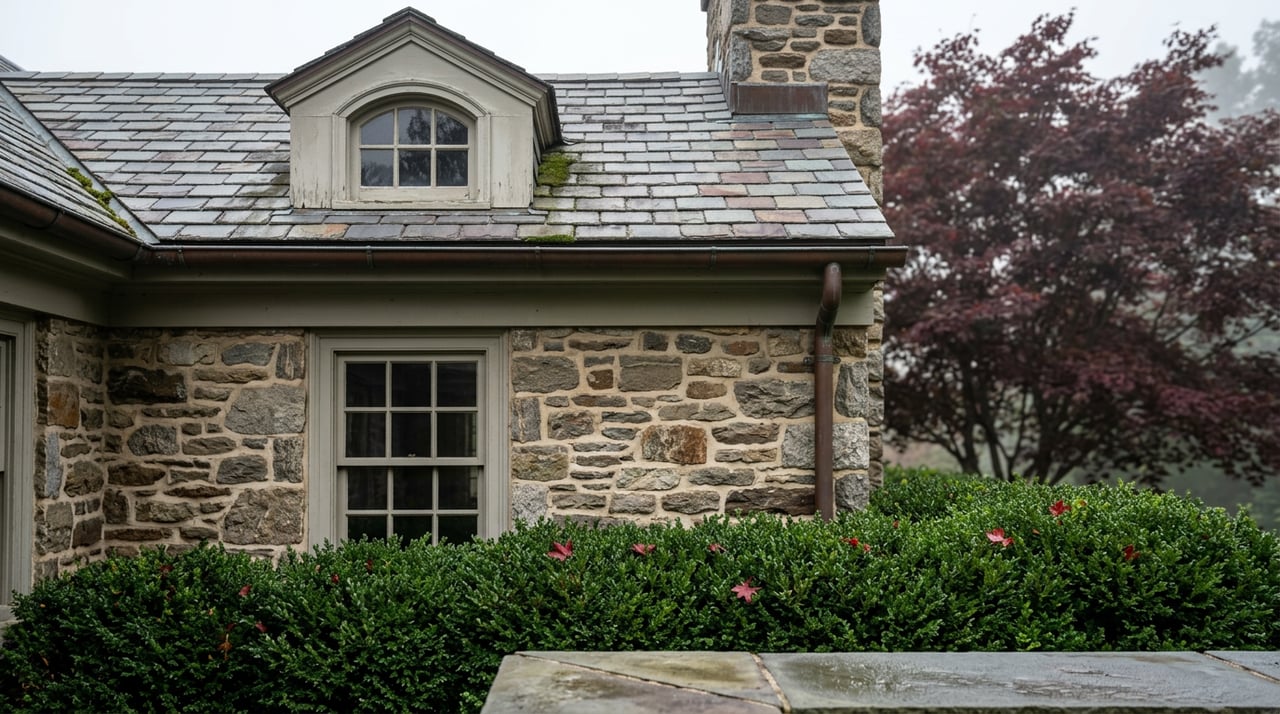
In April 2026, a homeowner on Hampden Lane in Bethesda's Greenwich Forest neighborhood submitted plans for a rear addition of 35 square feet and a batch of replacement windows. Nothing about the project sounds complicated. But before Montgomery County's Department of Permitting Services would even look at a building permit application, county historic preservation staff spent pages comparing two nearly identical Marvin window models, down to whether one had an extra aluminum trim piece the other lacked, and whether the homeowner's proposed Trex decking would need a Timbertech railing if DPS later required one for a 30-inch-high deck.
That review happened before the building permit conversation started. It happened because the house sits inside Greenwich Forest, one of Bethesda's designated historic districts, and in a designated district the county's Historic Preservation Commission gets the first word on anything visible or invisible that changes the exterior of the house or its setting.
Here is the thing a median price comp will never tell a buyer or seller: two houses on the same block in Bethesda, priced identically, sold in the same season, can face completely different renovation timelines depending on which side of a boundary line they sit on. That boundary is Greenwich Forest's historic district line, and it changes the math on what you can build, how fast you can build it, and what a previous owner may have quietly left unresolved.
What actually gets reviewed, and when
Greenwich Forest is governed by Montgomery County Code Chapter 24A, the county's historic preservation ordinance, along with district-specific guidelines and the Secretary of the Interior's Standards for Rehabilitation. Any owner who wants to alter the exterior of a house in the district, or change the setting around it, needs a Historic Area Work Permit before doing the work. That covers additions, new construction, window and door replacement, fences, decks, and grading.
Two details catch people off guard. First, changes that would never be visible from the street still require review. A rear addition tucked behind an existing non-historic addition, like the one at 8016 Hampden Lane, still went through full staff analysis. Second, removing a live tree wider than six inches in diameter triggers the same review process as a structural addition. Greenwich Forest's guidelines were written specifically to protect the tree canopy that gives the neighborhood its character, so a landscaping decision can land in the same queue as a construction drawing.
The part that actually costs time is the sequence. Montgomery County's own preservation office is explicit about it: the Historic Preservation Commission has to approve the Historic Area Work Permit before the Department of Permitting Services will issue a building permit at all. This is not two parallel reviews happening on the same clock. It is one gate in front of another gate. A contractor can't start pulling permits the way they would two blocks outside the district boundary, because the building permit application doesn't exist yet as a live option until the historic review clears.
The 25 percent line that actually limits square footage
Greenwich Forest's guidelines include a specific lot coverage cap under what staff reports refer to as Guideline D5: 25 percent of the lot. That number is not abstract. In a November 2022 case at 7819 Overhill Road, a homeowner proposed a two-story rear addition roughly 20 feet deep and 35 feet wide. Staff calculations showed existing coverage at 11 percent, rising to 18.6 percent with the addition, still under the 25 percent ceiling, which is why the project moved forward.
That is useful information for anyone comparing a Greenwich Forest listing to a similar house elsewhere in Bethesda. Outside the district, an addition's size is mostly a function of standard zoning setbacks and lot coverage rules that apply countywide. Inside Greenwich Forest, there's a second, district-specific ceiling layered on top, and it gets checked against the actual measured coverage of the specific lot, not a rule of thumb. A buyer who assumes "I'll add a family room later" needs to know what percentage of that lot is already covered before assuming there's room.
Materials get the same scrutiny as square footage. In an October 2021 case at 7827 Hampden Lane, a replacement fence came up short on a required three-foot setback from the front wall plane by about a foot, and staff flagged it as creating a wall-like appearance inconsistent with the district's open character. Small measurements matter here in a way they simply don't in most of Bethesda's non-designated streets.
How the two paths actually compare
| Inside Greenwich Forest | Elsewhere in Bethesda (non-designated) | |
|---|---|---|
| First review | Historic Preservation Commission staff and, often, a public hearing | Department of Permitting Services only |
| What triggers review | Any exterior change, including work not visible from the street | Structural, electrical, and code-related changes |
| Tree removal threshold | Any live tree over six inches in diameter | Governed by countywide tree and sediment rules, not district-specific caps |
| Lot coverage limit | District guideline cap (25 percent under Guideline D5) plus standard zoning | Standard zoning coverage rules only |
| Sequence | HAWP approval required before DPS will issue a building permit | Building permit is the first and only permit step |
| If denied | Appeal to the Montgomery County Board of Appeals | Standard permit appeal process |
The guidelines themselves are careful to say they aren't meant to block ordinary maintenance or reasonable updates. The stated goal is preserving the forested, low-coverage character that made Greenwich Forest worth designating in the first place, not freezing every house exactly as built. Montgomery County's preservation staff has also framed the broader intent of Chapter 24A as preventing teardowns and stabilizing neighborhood character, which is part of why buyers seek these blocks out to begin with. The friction is real, but it's not adversarial by design.
Why the timeline matters more in this market than it used to
In the three months ending June 2026, the median Bethesda sale price sat at $1.3 million, with homes going under contract in an average of 22 days. That pace leaves very little room for a buyer to discover, after closing, that the addition they budgeted six weeks for actually needs a design package, a staff review cycle, and possibly a public hearing before the county will even talk about a building permit. In a market moving that fast, the extra sequential step is the difference between a renovation that's done by spring and one that's still waiting on a hearing date when a family needed to move in.
Sellers face the mirror version of the same problem. If a previous owner completed exterior work in Greenwich Forest without ever filing a Historic Area Work Permit, that gap can surface during a buyer's due diligence and become a negotiating point, or worse, a condition that has to be resolved with the Historic Preservation Commission before a sale can close cleanly.
What to check before you write an offer or list a renovation project
- Confirm the address actually sits inside a designated historic boundary. "This part of Bethesda feels historic" is not the same as a Master Plan designation, and the distinction changes your entire permitting sequence.
- Pull the current lot coverage percentage before assuming there's room for an addition. Greenwich Forest's 25 percent cap is measured, not estimated.
- Ask whether prior exterior work on the property has a matching, approved Historic Area Work Permit on file. Unapproved work is a due diligence flag, not a footnote.
- Plan renovation timelines as two sequential steps, historic review first, then the building permit, rather than one combined process.
- If mature trees are part of the appeal of the lot, know that removing anything over six inches in diameter needs its own review before it comes down.
A few direct questions
Does historic designation in Greenwich Forest lower resale value? The ordinance's stated purpose, according to Montgomery County's own preservation guidance, is the opposite: preventing teardowns and keeping neighborhood character stable rather than letting it erode lot by lot. Whether that translates to a premium or a discount on any specific house depends on the property, not the designation alone.
How do I confirm whether a specific address is inside the district? Montgomery Planning's historic preservation office maintains the designation records and the file of past Historic Area Work Permit filings for addresses in Greenwich Forest. A call before writing an offer resolves the question well before a closing deadline forces it.
What happens if a Historic Area Work Permit is denied? The applicant can appeal to the Montgomery County Board of Appeals. It's a real process with a real cost in time, which is one more reason to design toward the district's guidelines from the first sketch rather than after a denial.
Greenwich Forest's rules aren't a reason to avoid the neighborhood. They're a reason to price the calendar correctly before you fall in love with a floor plan that assumes a timeline the county will never give you. If you're weighing a purchase, a renovation, or a sale inside one of Bethesda's designated districts, Broadbranch Group can walk the entitlement path with you before you're locked into a contract that didn't account for it. Unlock your property's highest and best use.