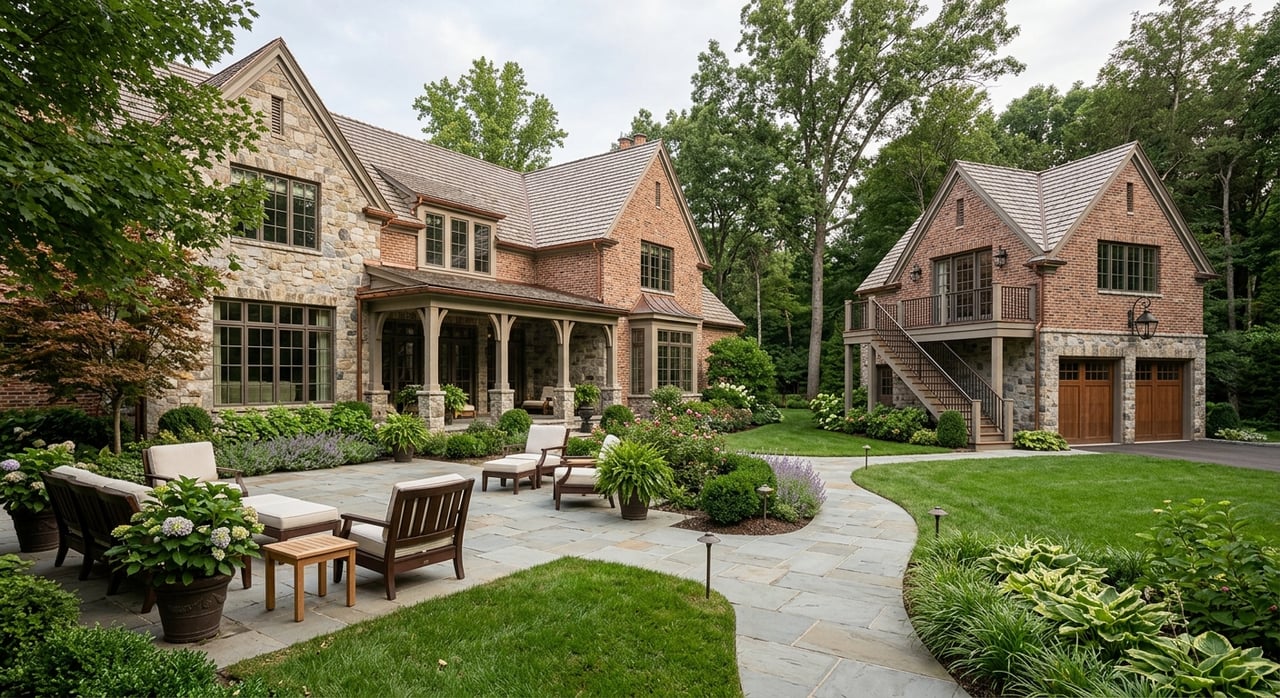
If you are thinking about adding an ADU in Montgomery County, the biggest question is not just can you build one. It is whether your neighborhood makes the project strategically worthwhile. The right location can improve rentability, reduce approval friction, and strengthen future resale appeal, while the wrong setup can create parking, lot, or covenant problems that limit upside. In this guide, you will see where ADUs tend to make the most sense in Montgomery County and what to review before you move forward. Let’s dive in.
Why neighborhood fit matters
In Montgomery County, an accessory dwelling unit is treated as a second dwelling that is subordinate to the main home. According to Montgomery Planning’s ADU overview, ADUs can be attached or detached and are part of the county’s approach to adding gentle density in built-out single-family neighborhoods.
That said, not every property is equally well positioned. The strongest ADU opportunities usually combine three things: a detached single-family home, enough physical room or an existing structure that can be converted, and a market that supports either strong rents or stronger future resale value.
Start with the county rules
Before you compare neighborhoods, it helps to understand the county rules that shape what is realistic.
ADUs are limited to detached homes
Current DHCA guidance for Class 3 ADUs says ADUs are allowed on single-family detached properties. They are not allowed on townhouses, condominiums, duplexes, or mobile homes.
The same guidance also requires owner occupancy. Either the main home or the ADU must be the owner’s primary residence, which is an important planning point if you are evaluating income potential.
Parking can change the equation
The county’s 2019 ADU updates removed the extra parking requirement for properties within one mile of a Metrorail, Purple Line, or MARC station, as described by Montgomery Planning. Outside that rail-adjacent exemption, parking remains a common friction point under the county code.
In practical terms, that means close-in neighborhoods with rail access may have an easier path than areas where adding parking is difficult. This is one reason location matters so much before you spend money on plans or feasibility work.
Existing structures may have an advantage
Montgomery County also has a helpful grandfather clause for some older properties. Under the county zoning code, a structure legally built before May 31, 2012 may be used as a detached ADU without setback or floor-area limits if it is not enlarged and does not add new windows on the adjoining side.
For owners with a legal garage, studio, or other detached structure, that can be a meaningful value driver. It can make conversion more straightforward than starting from scratch.
County approval is not the only hurdle
Even if the county rules appear favorable, private restrictions can still stop a project. Montgomery Planning notes that HOA rules and private covenants may still block an ADU, and the county objection process does not override those restrictions.
That is why early due diligence matters. A property can look promising on paper and still face non-county barriers that affect timing and feasibility.
Best ADU neighborhoods by strategy
Not every owner has the same goal. Some are focused on future resale appeal, some want rental income, and others need a lot that can physically support detached construction. In Montgomery County, those goals often point to different neighborhood types.
Bethesda and Chevy Chase for resale-led value
If your goal is long-term flexibility and resale positioning, Bethesda and Chevy Chase stand out. Census QuickFacts for Bethesda show a median owner-occupied housing value of $1,169,900, a median gross rent of $2,469, and a 64.0% owner-occupied housing rate. In Chevy Chase, the same source reports a median owner-occupied housing value of $1,245,000, median gross rent above $3,500, and a 75.9% owner-occupied housing rate.
Those numbers suggest a strong strategic case for ADUs that add flexibility to already high-value homes. In these areas, the best candidates are often detached-house lots that are near rail or already have a legal detached accessory structure that may qualify for conversion.
This is not a county-issued ROI ranking, but it is a reasonable market reading based on values, rents, and the county’s parking and conversion rules. For many owners, the appeal is not just current income. It is also the possibility that an ADU broadens future buyer interest and adds practical utility for multigenerational living or guest use.
Silver Spring and Takoma Park for rentability
If your main objective is lease-up potential, Silver Spring and Takoma Park look especially compelling. Census data for Silver Spring shows a 38.3% owner-occupied housing rate and a median gross rent of $1,913. Takoma Park shows a 54.2% owner-occupied housing rate, a median gross rent of $1,432, and a median owner-occupied housing value of $749,200.
Compared with Montgomery County overall, which has a median gross rent of $2,068 and median owner-occupied housing value of $640,300 in the same data set, these communities suggest a stronger renter orientation than some of the county’s more owner-dominant markets. That often makes attached units, including basement conversions, easier to justify from a rentability standpoint.
For owners who want a faster path to a usable ADU, this matters. In many smaller-lot neighborhoods, attached conversions can be more practical than detached new construction.
Potomac and North Potomac for detached builds
If your goal is a detached ADU, Potomac and North Potomac are often among the best physical fits. Census QuickFacts for Potomac reports an 84.8% owner-occupied housing rate and a median owner-occupied housing value of $1,157,000. North Potomac shows an 82.9% owner-occupied housing rate and a median owner-occupied housing value of $826,200.
These areas also align better with lot-size realities. Under the county zoning code, larger-lot districts such as R-200, RE-1, RE-2, and RE-2C have significantly more land area, and detached ADUs are capped at the smaller of 50% of the main dwelling footprint, 10% of lot area, or 1,200 square feet under the applicable zoning standards.
When you combine high owner occupancy, strong underlying values, and more generous lot dimensions, detached construction tends to make more sense here than in tighter close-in neighborhoods. It is often the cleanest fit for owners who want a standalone building rather than an interior conversion.
Why smaller-lot areas require more caution
Smaller-lot detached-house neighborhoods can still be viable ADU markets, but they usually call for a different approach. In the county code, R-60 has a minimum lot area of 6,000 square feet and R-90 has a minimum lot area of 9,000 square feet under the zoning standards for those districts.
On lots like these, detached new construction can become more difficult because of setbacks, parking, and lot-coverage pressure. That is why basement or attached conversions are often the more strategic route in many established detached-home neighborhoods.
This is where feasibility matters more than broad neighborhood labels. Two homes on the same street can have very different ADU potential based on lot layout, existing structures, and access.
How to match your ADU goal to the right area
The easiest way to think about Montgomery County ADUs is to start with your primary objective.
Choose a resale-led strategy if you want flexibility
A resale-led approach makes sense when you want the ADU to support long-term value, broaden buyer appeal, or create options for future household use. Based on the market and housing data reviewed, Bethesda, Chevy Chase, and Potomac fit this profile best.
In these areas, the ADU may be less about maximizing near-term rental yield and more about increasing property utility and positioning. That can be especially relevant for owners of high-value homes where optionality carries real weight.
Choose a rentability-led strategy if income is the priority
If your focus is steady tenant demand, renter-leaning areas usually make more sense. Silver Spring and Takoma Park are the clearest examples in the available county-level review.
This does not guarantee a specific return, but it does support the case for attached or lower-friction units in places where the rental market is already an important part of the housing mix. For many owners, that can create a more practical path to execution.
Choose a construction-led strategy if the lot is the asset
Sometimes the strongest opportunity is physical rather than purely market-based. If you have a large lot, a pre-2012 detached structure, or a property near rail that avoids extra parking requirements, those site characteristics can materially improve feasibility.
That is why Potomac, North Potomac, and other large-lot suburban areas often rank highly for detached builds. In many cases, the lot itself is what makes the project work.
A practical ADU screening checklist
Before you assume an ADU makes sense in your neighborhood, work through a short screening process:
- Confirm the property is a single-family detached home and that the owner-occupancy requirement can be met using the county’s DHCA ADU guidance.
- Check whether the property is within one mile of Metrorail, Purple Line, or MARC, since that can remove the added parking requirement under the county zoning provisions.
- Verify that there is no short-term residential rental use already on the lot, since the county rules do not allow both uses on the same property.
- Review HOA rules, covenants, and any historic-district constraints before assuming county approval is enough.
- Use the county’s ADU map and licensed application resources to look for nearby precedent.
The bottom line on Montgomery County ADUs
In Montgomery County, ADUs make the most strategic sense where zoning, lot conditions, and neighborhood economics all line up. Based on the available rules and housing data, Bethesda and Chevy Chase are the strongest resale-led candidates, Silver Spring and Takoma Park are the strongest rentability-led candidates, and Potomac, North Potomac, and other large-lot suburban areas are the strongest detached-build candidates.
The real opportunity, though, is property-specific. A smart ADU decision starts with feasibility, entitlement awareness, and a clear plan for how the added unit supports your broader goals. If you want help evaluating whether your property has hidden upside, connect with Shane Crowley to unlock your property's highest and best use.
FAQs
Which Montgomery County neighborhoods are best for ADU resale value?
- Bethesda, Chevy Chase, and Potomac appear strongest for resale-led ADU strategies because of their high home values and strong owner-occupied housing profiles in the available Census data.
Which Montgomery County areas are best for renting out an ADU?
- Silver Spring and Takoma Park stand out for rentability-led ADU strategies because the housing mix suggests stronger renter demand relative to more owner-dominant parts of the county.
Can you build an ADU on any property in Montgomery County?
- No. Current county guidance limits ADUs to single-family detached homes, and either the main home or the ADU must be the owner’s primary residence.
Do rail-access properties have an advantage for ADUs in Montgomery County?
- Yes. Properties within one mile of Metrorail, Purple Line, or MARC may be exempt from the extra parking requirement, which can make some ADU projects easier to execute.
Are detached ADUs easier on large lots in Montgomery County?
- In many cases, yes. Larger-lot areas such as Potomac and North Potomac are often a better physical fit for detached ADUs because lot size reduces pressure from setbacks, parking, and coverage limits.
Can HOA rules block an ADU in Montgomery County?
- Yes. Private covenants and HOA restrictions can still prevent an ADU even if county rules would otherwise allow it.