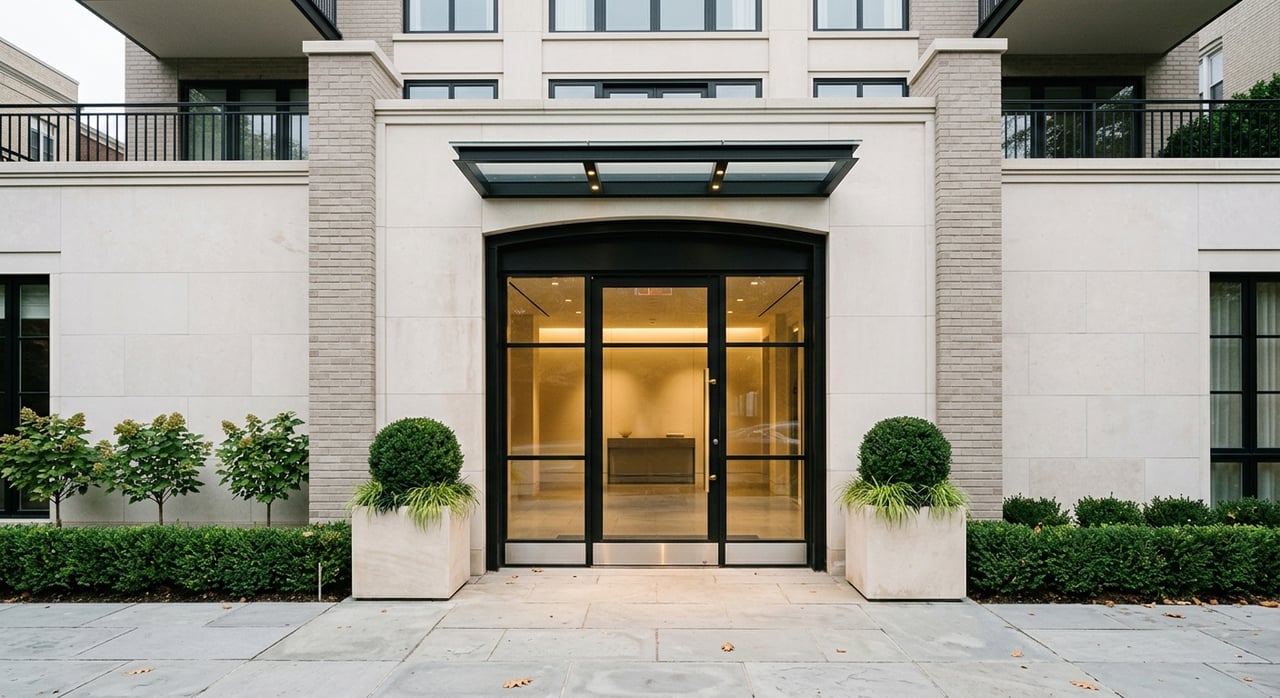
Looking for a home that feels polished, comfortable, and easy to step away from is not a niche goal anymore. If you travel often, split your time between cities, or simply do not want your schedule tied to constant upkeep, Bethesda deserves a close look. In the right setting, you can enjoy luxury finishes and a strong everyday routine without taking on the maintenance demands of a larger property. Let’s dive in.
Bethesda makes daily life simple
One reason Bethesda works so well for lock-and-leave living is its compact, mixed-use downtown. Bethesda Urban Partnership describes downtown Bethesda as a clean, safe, beautiful, and walkable district, with maintenance teams handling sidewalks, streets, flowerbeds, trash removal, and tree trimming. That kind of neighborhood support helps create a more effortless day-to-day experience.
Downtown Bethesda covers about 300 acres, and you can walk from one end to the other in about 20 minutes. For you, that means errands, dining, and entertainment can fit into a short walk instead of a long drive. It also means your home can feel connected rather than isolated when you are in town.
Bethesda Row shows this especially well. The area is known for its pedestrian-friendly design, with brick sidewalks, plazas, outdoor café seating, and parking placed behind buildings. It also includes a large mix of retail and restaurants near Metro access and the Capital Crescent Trail, which supports the kind of convenient routine many lock-and-leave buyers want.
Walkability supports a low-maintenance lifestyle
A true lock-and-leave lifestyle is not only about the home itself. It is also about whether the neighborhood reduces friction in your everyday life. Bethesda performs well here because so much of what you may want is close together.
The downtown area offers a broad mix of restaurants, plus theaters, galleries, public art, independent films, and year-round events in the Arts & Entertainment District. That matters because a low-maintenance home should still feel rewarding when you are there. In Bethesda, convenience does not come at the expense of activity or variety.
If you prefer to stay local on a weeknight or weekend, you can. If you want a quick dinner out, a film, or a walk through downtown, that option is built into the neighborhood. For many buyers, that is a major reason Bethesda stands out.
Transit helps you rely less on a car
Bethesda also works well for buyers who want flexibility in how they move around. The area is served by Metro rail, Metro bus, and Montgomery County Ride On buses, with more than a dozen routes serving downtown. Bethesda Station is on the Red Line and within walking distance of Bethesda Row and the Bethesda Trolley Trail.
That level of transit access can make ownership feel lighter. You may still want a car, but you do not have to depend on it for every outing. For some buyers, that means less driving, less parking stress, and fewer small logistics to manage before and after travel.
The free Bethesda Circulator adds another layer of convenience. It connects the Bethesda Metro Station, multiple public parking garages, and 20 stops throughout the district. You can park once and move around downtown on foot or with a short shuttle ride, which is useful whether you are running errands or hosting out-of-town guests.
Bethesda also has 17 public parking garages and surface lots in the downtown area. If you travel frequently or use your car only occasionally, that parking infrastructure can be a practical advantage. It supports the kind of ownership pattern many lock-and-leave buyers prefer.
Purple Line is future upside
Bethesda’s mobility story may improve further with the future Purple Line connection. WMATA is building a new mezzanine at Bethesda Station to connect Metrorail with the future Purple Line station, and the University of Maryland says passenger service is scheduled to begin in December 2027. For now, though, that should be viewed as future upside rather than current service.
There is also a temporary service note worth keeping in mind. WMATA has announced summer 2026 Red Line construction between North Bethesda and Friendship Heights from July 6 to September 6, 2026 while station work continues. That is a short-term disruption, not a permanent drawback, but it is still useful context if timing matters to your plans.
The right housing type matters most
In Bethesda, lock-and-leave living usually works best when the property type supports it. The strongest fit is often a condo or co-op with shared building services and association-managed common areas. This is where the details matter more than the label.
For example, Promenade Towers advertises 24/7 concierge service, covered parking, and resort-style amenities, and its co-op fee includes all utilities, basic cable, and property taxes. Kenwood Place Condominium says its condo fee includes all utilities and notes amenities such as a front desk, fitness center, party room, rooftop sundeck, pool, storage, and trash rooms.
Those examples show what low-maintenance ownership can look like in practical terms. You may have fewer exterior responsibilities, more predictable monthly expenses, and on-site services that support daily ease. If you leave town often, that setup can reduce the number of moving parts you need to manage.
What lock-and-leave means in Bethesda
In this market, lock-and-leave is not just a style of home. It is a combination of building services, neighborhood access, and clear ownership rules. When those three elements align, the home is much easier to enjoy on your schedule.
A strong candidate often includes features like secured entry, a staffed front desk or concierge, garage parking, elevator access, and association-managed upkeep of common areas. Then the surrounding neighborhood adds the second half of the equation, with walkability, transit, dining, and entertainment close by. Bethesda checks both boxes more consistently than many suburban locations.
This is one reason the area appeals to busy professionals, frequent travelers, and buyers who want a polished home base with less day-to-day friction. The convenience comes from the full package, not just the unit itself.
Townhomes can work, with limits
A townhouse can also support a lock-and-leave lifestyle, but only if you read the community rules carefully. Some communities cover meaningful exterior and common-area responsibilities, while others leave more work to the individual owner. You should never assume all townhome living is low-maintenance by default.
Bethesda Overlook offers a useful example of that distinction. Its association dues pay for trash pickup, grounds maintenance, roadway maintenance, management fees, and snow clearing of community streets and common walkways. At the same time, individual homeowners remain responsible for private property areas such as parking pads, walkways, steps, and entryways.
That maintenance boundary is a big deal. If you want true lock-and-leave ease, you need to know exactly what the association handles and what remains on your to-do list. In our experience, that is one of the most important questions to answer before you buy.
Questions to ask before you buy
If you are comparing luxury condos, co-ops, or townhomes in Bethesda, focus on the practical details behind the marketing language. A beautiful home may still fall short if the building or association structure does not match your lifestyle.
Here are a few smart questions to ask:
- What does the monthly fee actually cover?
- Are utilities included?
- Is there a front desk or true 24/7 concierge coverage?
- How is access handled for residents, guests, and deliveries?
- Is garage parking included, assigned, or separate?
- Which exterior and common-area responsibilities belong to the association?
- Which private areas remain the owner’s responsibility?
- Are there any upcoming transit or building changes that could affect convenience?
These details help you separate a home that is simply attractive from one that is genuinely easy to own.
Why Bethesda stands out
Bethesda works for lock-and-leave luxury living because it already has the ingredients that matter most. You have a walkable downtown, strong existing transit, a deep mix of dining and cultural options, and housing choices that can shift much of the maintenance burden to a building or association. That combination is hard to replicate.
Just as important, Bethesda gives you convenience without making daily life feel stripped down. You can have a home that is easier to manage and still enjoy a lively, well-connected setting. For buyers who want luxury with less hassle, that is a compelling balance.
When you evaluate Bethesda through that lens, the appeal becomes clear. The best opportunities are not just stylish homes. They are homes where the building, the block, and the broader neighborhood all work together to support the way you actually want to live.
If you are exploring luxury condos, co-ops, or townhomes in Bethesda and want a clear-eyed view of what truly fits a lock-and-leave lifestyle, Broadbranch Group can help you evaluate the details that matter most.
FAQs
What does lock-and-leave living mean in Bethesda?
- In Bethesda, lock-and-leave living usually means a home with building or association support, convenient neighborhood access, and clear maintenance responsibilities that make it easier for you to leave town without managing constant upkeep.
Are condos in Bethesda better for lock-and-leave living than townhomes?
- Condos and co-ops are often the clearest fit because they may include front desk service, shared amenities, utilities, and association-managed common areas, while townhomes can vary depending on what the HOA covers.
What should you check in a Bethesda condo or co-op fee?
- You should confirm exactly what the fee covers, such as utilities, cable, property taxes, common-area maintenance, front desk coverage, parking, and amenity access, because those items vary by building.
How walkable is downtown Bethesda for everyday living?
- Downtown Bethesda covers about 300 acres, and Bethesda Urban Partnership says you can walk from one end to the other in about 20 minutes, which supports easy access to dining, shops, entertainment, and transit.
What transit options are available in Bethesda right now?
- Bethesda currently offers Red Line Metro access, Metro bus service, Montgomery County Ride On buses, and the free Bethesda Circulator, while Purple Line service is still a future connection planned for 2027.
Is summer 2026 Metro construction a reason to avoid Bethesda?
- No. WMATA’s summer 2026 Red Line work is a temporary disruption tied to Bethesda Station improvements, not a permanent issue with Bethesda’s long-term transit access.